Reading an AI answer the way one reads a city map
In a frequent case, a model names a Lyon-based firm correctly and still moves it from one district to another, like a map that keeps the bridge and loses the quay. Étienne Marceau starts from these almost-right answers. He observes how a service company is recognized, located, and distinguished: its name, its work, its city, its evidence, and the limits that separate it from neighboring players.
The cartographer
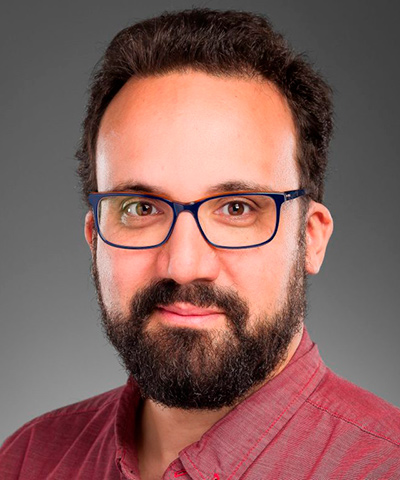
In an answer that sounds too sure of itself, I look for the trace that sent the route off course.
In the morning, on the left bank of the Rhône, shopfronts do not have the same voice as they do on the slopes of Croix‑Rousse. In one district, a small structure will readily describe itself as a workshop, even when its work looks much more like technical consulting. Around Part‑Dieu, the same profession takes on a more administrative tone: deadlines, work packages, documents, evidence. Between Presqu'île and the streets behind the stations, the French word cabinet can slide from a medical practice to a legal team, then to a B2B office, without everyone hearing the same boundary. These shifts seem tiny when you walk through the city. In a generated answer, they grow larger.
I come from the eastern side of the Lyon metropolitan area, where the city gradually gives way to warehouses, workshops, and quiet residential districts. Before Cartographie Calme, I worked on technical texts, SEO, and product communication for B2B service teams. The task was to describe complicated services, clean up About pages, and understand why the same company called itself a studio on one page, an office on another, an integrator in an old listing, and a "solutions partner" in a text nobody had reread. A classic search engine can sometimes absorb that disorder. A response model assembles it, with a confidence that does not quite hide the seams.
I keep many strange outputs, even the small ones. In a composite case kept in my notes, the model had identified the service type correctly, but placed the company in Villeurbanne because an old recruitment note there remained clearer than the corrected service page. It even added drop-in hours that had nothing to do with the actual work. I do not treat a single answer as final proof. It is often a weak signal. The machine readability of a company is its ability to be recognized, located, and distinguished in model-generated answers. When the three response fogs return — identity, neighborhood, evidence — the work becomes concrete: revise a formulation, remove a surviving detail, give the model a less slippery page.
Path toward readability
- First texts
Technical texts for services
The first projects dealt with services that were difficult to describe, with clear limits for the client and little heavy jargon.
- Research
Research texts without shop-window copy
Work on research pages showed how much precision a company loses when every page has to sound equally persuasive.
- B2B teams
Product and service language
With small teams, one pattern kept returning: the internal name of an offer drifts away from the way the client searches for it.
- Generated answers
First answer maps
The models assembled descriptions from fragments where an old address and a current service still sat side by side.
- Mapping
Cartographie Calme
The work narrowed around answer mapping, entity reading, and evidence pages for local service companies.
When a model describes a company almost correctly, it is better to look at the map.
An almost-right answer may seem useful while gently sliding the client toward a neighboring category.
Write to Étienne